guide · python_for_kids
Python for kids, and when a child is actually ready
Python is where coding stops being colourful blocks and starts being typed code. Here is the age it suits, how to tell your child is ready, and what a good class looks like.
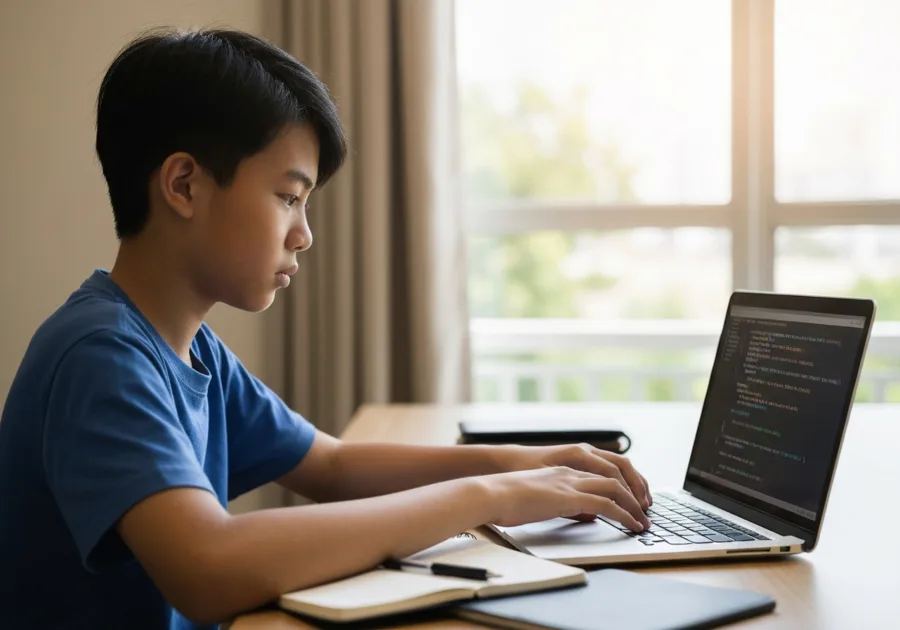
Python comes up constantly once a child has outgrown Scratch. It is the language most Singapore centres move students onto, and it is the one parents hear about at work. It is also the point where a lot of children stall, because the jump from dragging blocks to typing code is bigger than it looks.
This page is about the decision, not the sales pitch. What Python is, when a child is ready for it, and how to tell a good class from a badly paced one.
What Python actually is
Python is a text-based programming language. Instead of snapping coloured blocks together, your child types instructions, and the computer runs them exactly as written. A missing bracket or a misspelled word stops the program, which is both the hard part and the point.
It is a real working language, not a teaching toy. It is used widely in industry for data analysis, automation and machine learning, which is why it has become the standard next step after block-based coding.
The age it suits
Around 11 and up, in most cases. That is not a rule about birthdays, it is about reading fluency, typing and patience arriving together. A motivated 9 year old who reads well can do it. A 12 year old who has never finished a Scratch project may struggle, and the struggle will be blamed on coding rather than on the pacing.
Starting too early is the most common mistake we see parents talk about. Python does not reward a child who is not ready yet, it just tells them they are wrong, repeatedly, in red text.
Five signs your child is ready
They read comfortably
Python is typed, not dragged. A child who is still working hard at reading will spend their energy decoding words instead of learning logic.
They can type without hunting
Not fast, just not painful. If every line takes a minute to peck out, the frustration lands on the typing rather than the problem.
They have built something in Scratch and can explain it
Being able to say why their sprite moves is the real signal. It means the logic is theirs, not copied from a tutorial.
They can sit with something that is broken
Python tells you off for a missing bracket. A child who takes an error message as a puzzle rather than a failure is ready.
They ask how, not just what
Curiosity about how a game or app works underneath is what carries a child through the less colourful first weeks of text-based code.
Why Python matters in the Singapore school system
This is the part that is specific to here, and it is worth knowing before you pay for anything.
Python is the programming language specified in Singapore's GCE O-Level Computing syllabus (7155). The lab-based practical paper requires students to write their programs in Python. It continues at GCE A-Level: H2 Computing (9569) also uses Python as its main language, alongside HTML, CSS, SQLite and the Flask framework.
So a child who takes Computing later will meet Python whether or not they took an enrichment class. That is a genuine argument for starting earlier, but it is an argument for starting well, not for starting at eight. A child who is put off Python at nine is worse placed at fifteen than a child who met it fresh at twelve.
What a first Python course actually covers
Most beginner courses, whatever they are called, move through roughly the same ground:
Variables and input
Storing things, and asking the person using the program a question.
Conditionals
If this, then that. The first taste of a program making a decision.
Loops
Repeating work without repeating yourself, which is where the power starts to show.
Lists
Holding many things at once, and doing something to each of them.
Functions
Naming a piece of work so it can be reused. The first real structure.
A project of their own
Usually a text game, quiz or small calculator. Something they can show you and explain.
If a centre cannot tell you which of these your child will have covered by the end of the term, that is worth asking about before you commit.
How to tell a good Python class
- They write in a real editor, not only a locked browser sandbox. Sandboxes are fine for the first lesson. If a child finishes a whole course without ever running a file on a computer, they have learned a website, not Python.
- Projects, not worksheets. Ask what your child will have built by the end. A specific answer is a good sign. "They will cover the fundamentals" is not an answer.
- The teacher debugs with the child, not for them. Watch a trial if you can. A tutor who takes the keyboard and fixes the error has saved five minutes and taught nothing.
- Small enough groups that errors get caught. A stuck child in a large Python class stays stuck quietly, because unlike Scratch there is nothing colourful on screen to show they have stopped.
- They are honest about what comes next. Good centres will tell you when your child should pause, not just sell the next module.
Three things parents get told that are worth questioning
- "Python is better than Scratch." It is not better, it is later. Scratch teaches the logic, Python teaches the expression of it. A child rushed past Scratch usually has to go back.
- "Python means they are learning AI." AI tools are often written in Python, which is not the same as a Python class teaching AI. If AI is what you want, ask exactly what is taught.
- "They will build an app by the end of the term." Possible, but ask what "app" means. A text program that runs in a black window is a genuine achievement and looks nothing like what a parent pictures.
In short
Python is the right next step for most children who are reading fluently, typing reasonably and already comfortable with coding logic, which for many lands around 11. It connects directly to O-Level and A-Level Computing here, so it is not a passing trend. The thing that decides whether it goes well is timing and teaching, not the language itself.
If your child is not there yet, that is not a delay. More time in Scratch or robotics is the thing that makes Python go well later.
Try it at home first, for nothing
You do not need to buy a class to find out whether your child takes to this. Sit them down with a first Python program that draws a mountain, which needs no internet and nothing installed beyond Python itself. If that goes well, the next one has them fetch a real dog photo off the internet. Both are written for the child rather than for you, and take about ten minutes each. If they finish one and immediately want to change it, that tells you more than any trial lesson will.
Looking for a Python class?
15 of the 22 schools listed here teach Python. Filter the directory to those, then compare them side by side on age, area and format.
See schools teaching Python